
Explore Our Services
Explore our range of services designed to help you move forward with confidence, wherever you're headed next.
How is Elituq’s AI different?
-
Unlike traditional, reactive AI tools or standard chatbots, agentic AI systems are designed to operate as autonomous, self-directed software networks. These architectures leverage advanced planning capabilities, persistent memory, and automated tool-use to execute multi-step workflows across disjointed data domains. For enterprise operations, this translates to heightened efficiency, self-correcting automation, and the secure translation of complex research data into production-grade business value.
-
Elituq Technology Inc. operates as a strategic catalyst for Canadian maritime technology by entering into a major joint venture with the Arctic Economic Development Corporation (AEDC) to establish PolArctic Canada. This collaborative venture utilizes specialized machine learning models to address critical environmental and maritime challenges, including seasonal sea ice forecasting, rapid nearshore bathymetry profiling, precision fishing analytics, and aquaculture habitat identification.
-
Headquartered in the major maritime hub of Halifax, Nova Scotia, Elituq Technology Inc. actively aligns its research and deployment strategies to support the overarching goals of Canada's National AI Strategy. By integrating advanced AI systems to create digital twin environments, ethical inclusion of Indigenous traditional knowledge, and complex geospatial analytics , ETI empowers corporate, regional, and government stakeholders to make highly accurate, data-backed decisions for sustainable ethical growth.
-
Elituq Technology Inc. is an advanced AI development and blue-tech architecture firm specializing in the design of next-generation autonomous software networks. In close coordination with its U.S. counterparts, PolArctic LLC, and PolArctic Canada ETI's core mission is to pioneer robust agentic AI frameworks capable of solving complex climate, geospatial, and maritime infrastructure challenges across Canada and North America.
Our Process
System Design
Architecting custom, autonomous agentic AI frameworks that execute multi-step workflows, handle complex data, and utilize persistent memory systems.
Orchestrate
Managing multi-agent frameworks that seamlessly organize tasks and coordinate workflows across separate data systems.
Ethical
Designing transparent models that respect Indigenous data sovereignty and follow strict responsible AI guidelines.
Strategic Consulting
Aligning advanced agentic AI capabilities with your organization's core metrics to guarantee clear operational returns and scalable growth.
Past Project
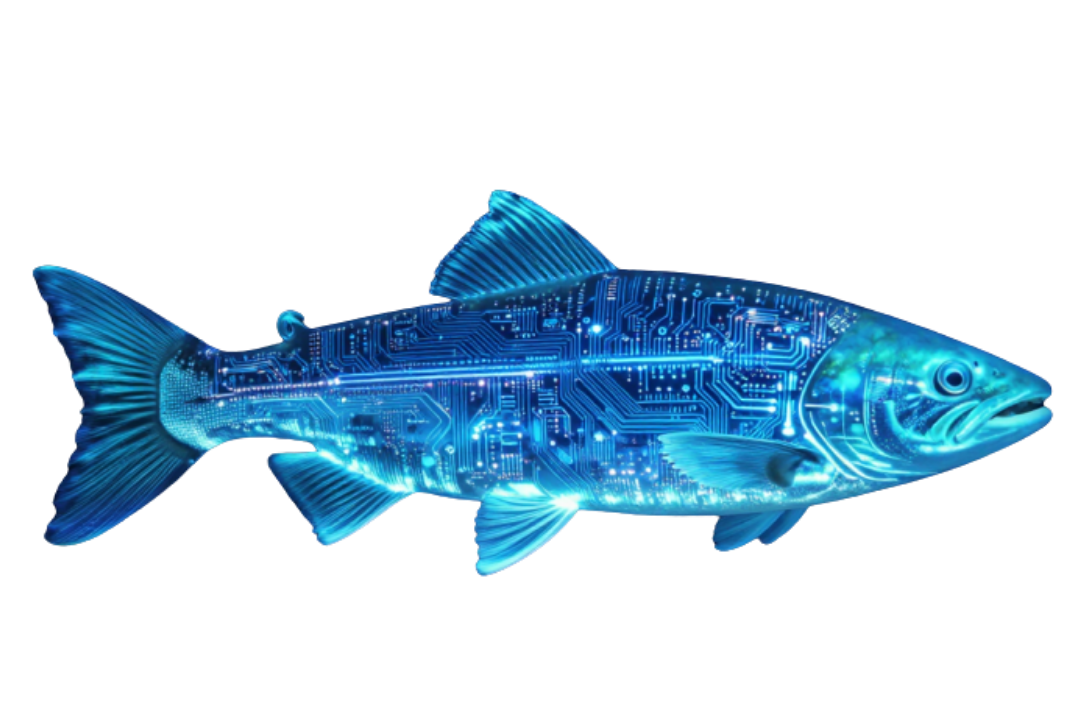
A Digital Twin of the Ocean
Our autonomous agentic AI frameworks power sophisticated Digital Twins that simulate complex real-world environments to optimize your maritime operations. By engineering interactive data pipelines that blend physical climate variables with specialized biological and human-behavioural agents, our systems accurately predict migration patterns, locate optimal high-yield harvesting zones, and minimize non-target bycatch. These self-directed software networks test infinite operational scenarios in real time, enabling commercial fleets to slash fuel overhead, proactively adapt to climate volatility, and make data-backed strategic decisions that maximize both profitability and environmental stewardship.
Could this framework work for other industries?
-
The framework constructs a real-time virtual replica of the entire global supply chain network. This environment integrates:
Physical Infrastructure: Exact locations and operational capacities of warehouses, ports, manufacturing plants, and distribution centers.
External Variables: Live data feeds mapping global weather disruptions, geopolitical border delays, fluctuating fuel prices, and ocean carrier schedules.
Dynamic Inventory Layers: Real-time asset tracking of stock levels, shelf-life constraints, and raw material availability.
-
The Environment: The Digital Twin maps habitat layers, flora density, water availability, and microclimate temperatures.
The Agents: Autonomous software agents model individual wildlife species (tracking migration and food needs) alongside human agents (poachers, tourists, or park rangers).
The Impact: Conservationists can run simulations to predict how a new highway or a wildfire will disrupt wildlife corridors. This allows teams to place protected zones and wildlife bridges with absolute precision.
-
The Environment: The Digital Twin maps the physical grid infrastructure, power lines, transformer capacities, and real-time weather data (solar exposure, wind speeds).
The Agents: Agents represent localized power sources (wind turbines, solar farms), consumer battery storage units, and regional demand centers (cities, factories).
The Impact: The system acts as a self-healing grid. If a storm knocks out a power line, the agents communicate autonomously to reroute electricity in milliseconds, balancing supply and demand to prevent blackouts without human intervention.